
Sponsored

Maximizing Battery Life

airline tech

Well-Known Member
Joined
Aug 24, 2022
Threads
28
Messages
4,447
Reaction score
8,496
Location
Midwest - KS
Vehicle(s)
2022 Ranger Lariat-Super Crew, Cactus Gray
Occupation
Aircraft Tech
OK, now you have me totally confused! How does decoupling the alternator from the engine still drive it from the axles? Once you decouple the alternator there is nothing driving it but its own inertia.

As far as I understand the only way to increase the voltage output of the alternator is for the regulator curcuit to increase the voltage to the field coils in the alternators rotor. Which will increase the load the alternator puts on its drive. So spiking the voltage in an off throttle condition (coasting) would help with engine breaking.

I'm very interested in what exactly this alternator clutch does and how it fits into this whole charging system.
I cannot find the article on it now from my research, I was thinking the same thing that the PCM was increasing the voltage, but the article stated that it used the coasting speed to generate the charging voltage and it is tied into the clutch pulley on the alternator.
Either way it works by coasting/deceleration and the length of time (regenerative charge) is applied relates to coasting speed. Short Burst-on a straight road, and long continuing charge coasting down a hill.
So even with the PCM increasing the voltage and increasing friction on the pulley it still relies on the rotational speed of the drive axles.

I have never worked with the smart charge system and finding correct info on how the system operates is difficult, and there is tons of (I think's) on the internet for this system. Ford's manuals are very vague and has some inaccurate information as well. So that just compounds the hassle in obtaining correct and accurate information.
So, I did the best I could with the information I found in breaking down the system and how it operates. I can be wrong on some things and value any input to correct my mistakes in getting a complete accurate system operation, for all on here to benefit.
Sponsored

 
OP
OP

TJC

Well-Known Member
First Name
Tony
Joined
Aug 28, 2020
Threads
45
Messages
3,924
Reaction score
9,824
Location
North Carolina
Vehicle(s)
93 Miata, 05 Ranger 4x4, 20 Ranger 4x4, 23 CX-5
Maybe it is both the alternator clutch and higher voltage to the field coils working in concert. That's how I understood how it works.

What bothers me a little bit about all of this is that you are robbing power from a depleted battery to energize the clutch and increase the magnetic flux from the alternator field coils... hoping to gain more than you give while coasting.

What a balancing act! I wonder just how efficient the system really is? The gain must be substantial enough to justify the effort involved.

I'd love to see the logic flowchart and source code controlling this system.
 

pboggini

Well-Known Member
First Name
Pete
Joined
Nov 30, 2018
Threads
12
Messages
235
Reaction score
253
Location
San Jose, CA
Vehicle(s)
2019 Lightning Blue XL Ranger 4x2 Supercrew.
Based on @airline tech recommendation to not run higher than 80% soc that may damage battery, today I reduced mine from 90 to 80 and reactivated ass/BMS with Forscan. Realized that with ass deactivated I was also getting no bms action, always running at 14 volts when driving. Now it stays around 12.4 until coast then pops to 14.7. May try 85 to see if I get slightly higher soc when driving.
I'm going to leave mine at 90. My battery is over 4 years old (I picked up the truck 4 years ago later this month) per the Forscan PID (somewhere north of 1460 days) and up until a couple of months ago the only thing I noticed was auto stop/start wasn't working reliably. So, the system at 75% was not charging enough for my type of driving. As I've mentioned before, I don't hate auto stop/start but I'd prefer it to default to off (might look at that adaptor thing mentioned though I'd prefer it always just be off when I start the truck) so I've never disabled it.

My thinking is based on my little bit of experience and reading this and other threads with a lot of good info from the likes of @airline tech , @TJC and @dtech . Also, target voltage for 80% as @TJC says is 12.66, the target voltage for 90% is 12.78. That seems a lot better to me. The two ~150 mile drives I had this weekend lead me to believe that 90 is actually quite good as I've not seen the spike in voltages (I tried it a bunch on the trip home Sunday night) rather I've just seen the voltage hover between 14.0 and 14.2 the entire trip. Also, for the first time in months I've seen the voltage while idling or driving around drop below 14 (of course temps are warmer) but then auto stop/start has been working like when the truck was new since the first long drive on Friday.

My hope is that the Ford engineers were thinking about this regenerative charging and that they don't just throw it around. Rather, I would hope they take a lot of things into consideration and try to target 100% charge with this and base the calculations on the SOC %. If they did that then it would seem like one could put in just about any % and it would be fine. If we could talk to one of the engineers that would be great. Note, one of my old neighbors and friends moved from my neighborhood up to Folsom and works for the Ford dealer there. He's a parts genius and pretty well connected. I've asked him to see if he can find someone who can shed a bit more light on this.

Do we know the engineers did this? Of course not but I'm willing to keep mine at 90% and I promise to tell you all if I fry my battery:). I've pretty much got nothing to lose as it seems my 4 years with a battery is pretty darn good for the stock system.
I'm hoping the weather warms up and @TJC can get back to testing. For me, disconnecting the BMS is an interesting idea but since I do actually want to use auto stop/start from time to time and I do appreciate the system kind of looking out for my battery I'd prefer to find the happy SOC %.

My numbers just recently, CCA 685 last Friday morning, 785 Sunday morning, 720 Monday morning, 713 this morning (Tuesday). The first three the temps were around 43-45 from memory, this morning it was 39 degrees F. I think I'll start a spreadsheet otherwise I'll be going from memory which is likely bad.:).
 

RangerBill

Well-Known Member
First Name
Bob
Joined
Jun 8, 2022
Threads
3
Messages
1,600
Reaction score
2,119
Location
PA
Vehicle(s)
2019 Ford Ranger Lariat Super Crew FX4
Occupation
retired
Maybe it is both the alternator clutch and higher voltage to the field coils working in concert. That's how I understood how it works.

What bothers me a little bit about all of this is that you are robbing power from a depleted battery to energize the clutch and increase the magnetic flux from the alternator field coils... hoping to gain more than you give while coasting.

What a balancing act! I wonder just how efficient the system really is? The gain must be substantial enough to justify the effort involved.

I'd love to see the logic flowchart and source code controlling this system.
The clutch is mechanical in nature. The alternator field current is small compared to the generated output current.
 

got3fords

Well-Known Member
First Name
James
Joined
Apr 12, 2021
Threads
131
Messages
5,317
Reaction score
13,787
Location
22973
Vehicle(s)
2026 Marsh Gray Ranger Raptor, 1995 Harley XLH1200
Occupation
Mom Joke Professional
I just realized something, assuming the 2012 Focus had a similar BMS, I got almost 6 years on the original battery and only replaced it once before selling it with 152k miles on it at over 9 years old. Never even realized it had a BMS, never cared.


OP
OP

TJC

Well-Known Member
First Name
Tony
Joined
Aug 28, 2020
Threads
45
Messages
3,924
Reaction score
9,824
Location
North Carolina
Vehicle(s)
93 Miata, 05 Ranger 4x4, 20 Ranger 4x4, 23 CX-5
I just realized something, assuming the 2012 Focus had a similar BMS, I got almost 6 years on the original battery and only replaced it once before selling it with 152k miles on it at over 9 years old. Never even realized it had a BMS, never cared.
I suspect a lot has changed since 2012 with BMS technology
 

dtech

Well-Known Member
Joined
May 10, 2020
Threads
37
Messages
3,135
Reaction score
7,574
Location
colorado
Vehicle(s)
Ranger Lariat FX4, chromed and forever damperless
OP
OP

TJC

Well-Known Member
First Name
Tony
Joined
Aug 28, 2020
Threads
45
Messages
3,924
Reaction score
9,824
Location
North Carolina
Vehicle(s)
93 Miata, 05 Ranger 4x4, 20 Ranger 4x4, 23 CX-5
The clutch is mechanical in nature. The alternator field current is small compared to the generated output current.
Forgive my ignorance. I purchase and keep my autos longer than most. My last previous purchase was 2005. My fleet consists of a 1993, 2003, and 2005 models. A great deal of technology has changed since then and I am playing catch up. I was assuming the clutch was similar to an AC compressor clutch.

So under what conditions does the clutch engage? Can I assume it is based on engine rpm?
 
OP
OP

TJC

Well-Known Member
First Name
Tony
Joined
Aug 28, 2020
Threads
45
Messages
3,924
Reaction score
9,824
Location
North Carolina
Vehicle(s)
93 Miata, 05 Ranger 4x4, 20 Ranger 4x4, 23 CX-5
article on clutch pulley - seems it has to do mostly with smoothness and extending life of serpentine belt components. Might also be why those who monitor charging voltages have reported a brief occasional spike.

https://idpartsblog.com/2018/07/09/clutched-alternator-pulleys-are-important/
I was just reading that article! I believe Ford references the alternator clutch in the BMS system. I know I read it somewhere.

Re: Brief Spikes
I have noticed very slight changes in charge voltages with BMS disabled where they were not expected, but only 0.1v for a second or so. Might be the clutch doing its thing.
 

dtech

Well-Known Member
Joined
May 10, 2020
Threads
37
Messages
3,135
Reaction score
7,574
Location
colorado
Vehicle(s)
Ranger Lariat FX4, chromed and forever damperless
I was just reading that article! I believe Ford references the alternator clutch in the BMS system. I know I read it somewhere.

Re: Brief Spikes
I have noticed very slight changes in charge voltages with BMS disabled where they were not expected, but only 0.1v for a second or so. Might be the clutch doing its thing.
I have to laugh based on recent statements from the airlinetech and Phil regards accuracy of Ford's documentation - having once worked in engineering you get your work done and some poor new hire or tech writer gets stuck documenting it and of course the engineer usually doesn't have the time of day for this so the tech writer follows suit and takes liberties to get their job done, some things never change. Doesn't appear that alternator pulley has much if anything to do with the BMS but Ford's tech writer probably said I'll think I'll have a little fun today and make up some bs about the pulley knowing that nobody in the chain of command gives a rat's *ss whether it's accurate or not. I admittedly showed little respect for the tech writers, thankless job.
 

RangerBill

Well-Known Member
First Name
Bob
Joined
Jun 8, 2022
Threads
3
Messages
1,600
Reaction score
2,119
Location
PA
Vehicle(s)
2019 Ford Ranger Lariat Super Crew FX4
Occupation
retired
Forgive my ignorance. I purchase and keep my autos longer than most. My last previous purchase was 2005. My fleet consists of a 1993, 2003, and 2005 models. A great deal of technology has changed since then and I am playing catch up. I was assuming the clutch was similar to an AC compressor clutch.

So under what conditions does the clutch engage? Can I assume it is based on engine rpm?
As far as I know, it engages anytime the engine is driving the alternator (engine RPM is trying to drive the alternator pulley greater than the alternator RPM) Under this condition the pulley RPM is the same as the alternator RPM. The clutch allows the alternator to spin faster than the pulley RPM when the engine is slowing down. I believe it is an over-running clutch built into the alternator pulley.
See this link: https://www.continental-engineparts...lternator-Decoupler/Products-(1)/Products/OAD
 

got3fords

Well-Known Member
First Name
James
Joined
Apr 12, 2021
Threads
131
Messages
5,317
Reaction score
13,787
Location
22973
Vehicle(s)
2026 Marsh Gray Ranger Raptor, 1995 Harley XLH1200
Occupation
Mom Joke Professional
I have to laugh based on recent statements from the airlinetech and Phil regards accuracy of Ford's documentation - having once worked in engineering you get your work done and some poor new hire or tech writer gets stuck documenting it and of course the engineer usually doesn't have the time of day for this so the tech writer follows suit and takes liberties to get their job done, some things never change. Doesn't appear that alternator pulley has much if anything to do with the BMS but Ford's tech writer probably said I'll think I'll have a little fun today and make up some bs about the pulley knowing that nobody in the chain of command gives a rat's *ss whether it's accurate or not. I admittedly showed little respect for the tech writers, thankless job.
Yeah, it seems to be purely mechanical. So something else must tell the alternator to output more. Here's a vid on the OAP (overrunning alternator pulley.
 

dtech

Well-Known Member
Joined
May 10, 2020
Threads
37
Messages
3,135
Reaction score
7,574
Location
colorado
Vehicle(s)
Ranger Lariat FX4, chromed and forever damperless
Yeah, it seems to be purely mechanical. So something else must tell the alternator to output more. Here's a vid on the OAP (overrunning alternator pulley.
if it extends the life of the serp belt pulleys , alt bearings and especially the belt tensioner I'm all for it, I've replaced tensioners on transverse engines and it's a pia, when the tension spring weakens even at idle you can see some slop in the belt from slight variations from the crank.
 
OP
OP

TJC

Well-Known Member
First Name
Tony
Joined
Aug 28, 2020
Threads
45
Messages
3,924
Reaction score
9,824
Location
North Carolina
Vehicle(s)
93 Miata, 05 Ranger 4x4, 20 Ranger 4x4, 23 CX-5
As far as I know, it engages anytime the engine is driving the alternator (engine RPM is trying to drive the alternator pulley greater than the alternator RPM) Under this condition the pulley RPM is the same as the alternator RPM. The clutch allows the alternator to spin faster than the pulley RPM when the engine is slowing down. I believe it is an over-running clutch built into the alternator pulley.
See this link: https://www.continental-engineparts...lternator-Decoupler/Products-(1)/Products/OAD
Learn something new every day!

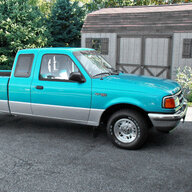
Nice 99 (?) Ranger BTW!
 

pboggini

Well-Known Member
First Name
Pete
Joined
Nov 30, 2018
Threads
12
Messages
235
Reaction score
253
Location
San Jose, CA
Vehicle(s)
2019 Lightning Blue XL Ranger 4x2 Supercrew.
I'm loving all this discussion by the way. Thanks all for continuing this and my goal is to figure out what the right SOC % is.
Sponsored


Top