Superspirit
Well-Known Member
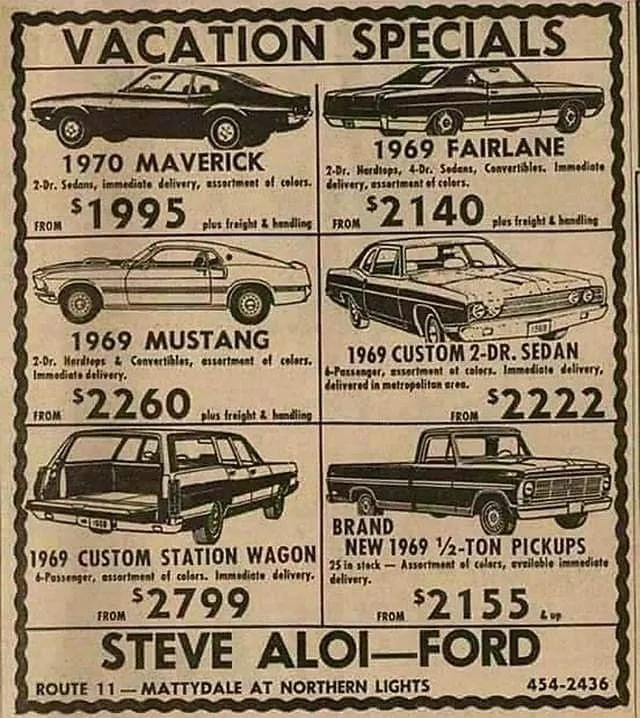
Yup, and I remember when you could buy a brand new Maverick for $1999.00 those were the days.
Sponsored

Good memory Joe. Look at the old ads from back then and it makes you sick at what things cost today.Yup, and I remember when you could buy a brand new Maverick for $1999.00 those were the days.
I have said this before on a different thread, and I am going to say it again lol. Highway RobberyGood memory Joe. Look at the old ads from back then and it makes you sick at what things cost today.

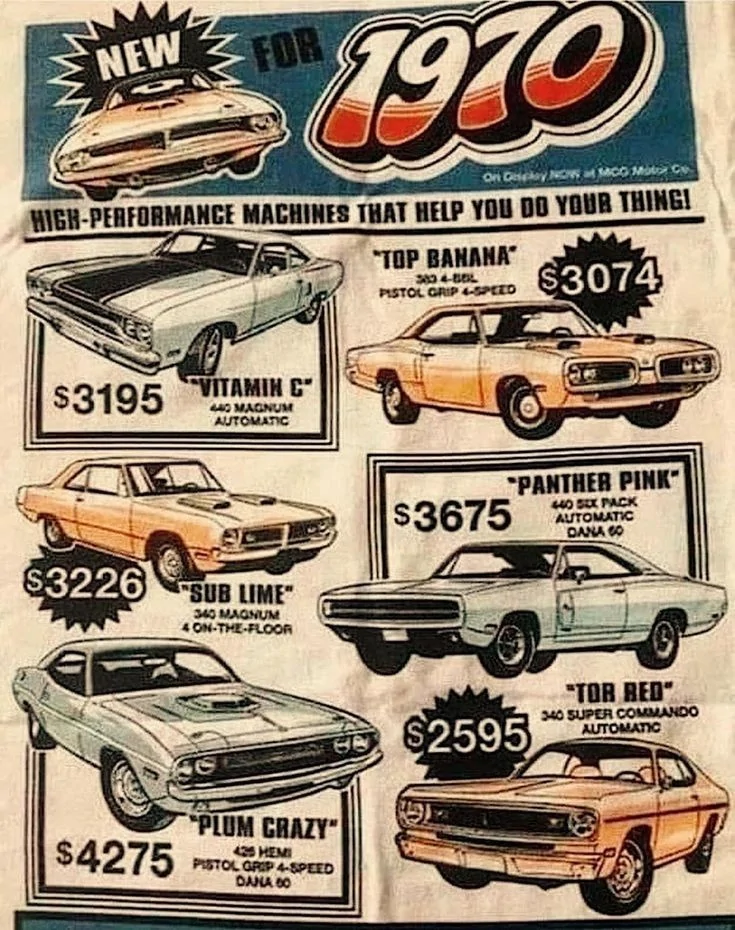
Just look at the price of that Plumb Crazy Hemi ! Now at the auction it'll go for well over 6 figures.


For the most part yes.I have said this before on a different thread, and I am going to say it again lol. Highway Robbery


Not to mention the arm and leg that they want along with the 50,000+ dollar price tag.For the most part yes.
A good part of it though is all the regulations they have now that make cars safer and cleaner. There was no catalytic converters and gas was leaded. Back then when those vehicles were made most didn't even have seat belts let alone air bags, touch screens, computers and cameras like they do now. Then add inflation in and here we are with an average car price of $50,000!
It due to Federal regulations, the bigger the more lax the regs!If Ford understood the market, they wouldn't be losing money, right? We won't know how well the slate will sell unless/until it's available. I think there's a market for a small, cheap, utilitarian vehicle that will be all over it. I still see a lot of people trying to keep their 20 year old last-gen rangers (and similar vintage toyotas) because they don't want a giant supertruck, they want something small and practical. I'd much rather buy a new small truck than someone else's god-knows-how-it-was-maintained ancient rusted-out truck, but I can't buy that thing. The problem for the domestic manufacturers is that they've become incapable of making a small vehicle cheaply and depend on large high-margin vehicles too much to provide an option for something else.
I understand that, but other companies seem to be able to make a profit on smaller vehicles. If it were a truly free market I wouldn't really care what they make, but in this reality they're "too big to fail" so I get to subsidize their mistakes while not getting the selection I want.The reality has been that for the last 25 years or so, the smaller, cheaper vehicles they were required to sell to meet CAFE standards were actually being subsidized by the high-end SUVs and trucks where the margins were high. They got tired of losing money on the low end and decided to go all-in on the high end.
I'd say it's politics more than regs--in the absence of intense lobbying (in large part by the US manufacturers who want to keep their domestic market gravy train going) the situation would have been normalized decades ago. The regs in question were written in a time where people still thought nobody would be nuts enough to use an 8000lb work truck as a daily driver and luxury status symbol.It due to Federal regulations, the bigger the more lax the regs!
I was attempting to be apolitical.... but I agree.I'd say it's politics more than regs--in the absence of intense lobbying (in large part by the US manufacturers who want to keep their domestic market gravy train going) the situation would have been normalized decades ago. The regs in question were written in a time where people still thought nobody would be nuts enough to use an 8000lb work truck as a daily driver and luxury status symbol.

Mower vs car is not even a valid debate though. Yes minute to minute a push mower may emit more emissions that a car, or even a few cars running for the same time frame, but the run time of all cars combined verse all mowers combined the cars will emit way more emissions and even the run time numbers of the mower will look like a tiny little dot on the graph. In CA I really think they went after the small engines more for the noise than the emissions, but used emissions as the excuse. There are quieter electric alternatives for most small engine tools now, but they cost more with less runtime.Toyota and Mazda both held out.
And I am convinced that EV adoption has more to do with control than any efficiency gained or climate issue. EVs simply move the pollution from the car to the smoke stack. And modern auto are very clean, A typical push mower emits more pollution that a car. And CO2 (no matter what they tell us) is not evil, in fact higher CO2 levels will increase plant growth dramatically. The up goes the O2 levels right behind it.
Actually it is much the opposite.The reality has been that for the last 25 years or so, the smaller, cheaper vehicles they were required to sell to meet CAFE standards were actually being subsidized by the high-end SUVs and trucks where the margins were high. They got tired of losing money on the low end and decided to go all-in on the high end. It was also largely the consumer's fault for being willing to pay over $60k for a pickup truck. I'm old enough to remember when people bought pickups because they were cheaper than cars.
 Initially that was the case, smaller car = smaller price, and better economy. But then the EPA decided to help. They devised a formula that is commonly called the "footprint rule." They classify vehicles by how much square footage they cover, and group the sizes into classifications, each having their own mpg requirements. From time to time at the whim of politics, the classes are "updated" often to the extent to which the technology isn't economically or technologically viable for a certain class, and so they bump the size up to fit into a larger footprint-cheaper and more desirable to make a vehicle larger. That's why a Honda Civic is larger than the Accord of 30 years ago, and today's Ranger is bigger than F-series up to about the mid seventies.
But also remember that wages were just as "Nostalgic" Wish I'd have known about that dealer 56 years ago; I paid $4100 for my Non-RT Challenger when I came home from the 'Nam Dec. 1970.Good memory Joe. Look at the old ads from back then and it makes you sick at what things cost today.
Just look at the price of that Plumb Crazy Hemi ! Now at the auction it'll go for well over 6 figures.
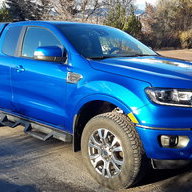
Actually, the domestic three really struggled with smaller cars until the Japanese gave them no choice in the '80s.Actually it is much the opposite.
"The road to hell is paved with good intentions." and " I'm from the government and I'm here to help."Actually, the domestic three really struggled with smaller cars until the Japanese gave them no choice in the '80s.
But the bigger problem was that most consumers didn't really want them, so they had to be sold at a loss, subsidized by the sales of larger cars, trucks and SUVs that they really did. If they didn't sell enough of the smaller cars, they got zinged under the CAFE rules and had to purchaser credits from Elon. (For their first decade, Tesla's profits came from the sale of EV credits to everyone else and not by selling EVs)
As for the "footprint" rule, that came later when the feds realized that the previous paradigm had backfired and was stimulating the sale of SUVs & pickup trucks instead of smaller passenger cars. They wanted to impose harsher mileage standards on them as well. But again the domestics responded unpredictably to the feds. That's why over the last decade or so, pickups have gotten ginormous.


